
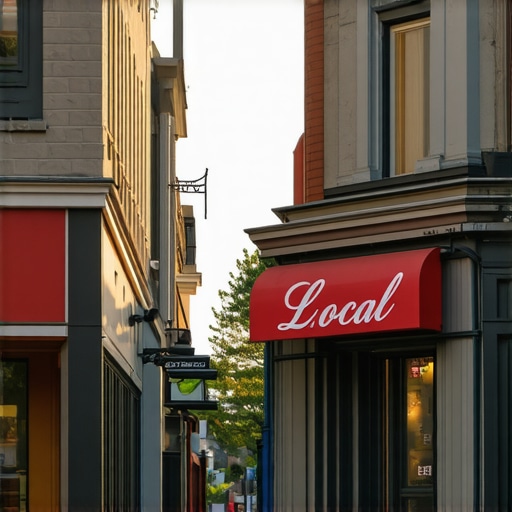
5 Ways to Outrank the Neighborhood Giant Using Hyper-Specific Local Content
In the digital landscape of local search, there is a recurring battle: David versus Goliath. The “Goliath” is the national chain or the established franchise with a million-dollar marketing budget and a dedicated SEO team. The “David” is the local plumber, the boutique law firm, or the family-owned HVAC company. For years, the giants held the advantage through sheer brute force and domain authority. However, the tide has turned. Today, the secret weapon for the underdog is hyper-specificity.
As a Google Business Profile Product Expert, I, Kevin Pauls, have seen firsthand how small businesses can dismantle a giant’s lead by leveraging what the big brands lack: local soul and neighborhood-level relevance. According to data from Project Practical, “shopping near me” searches have seen exponential growth of over 200%. This shift in consumer behavior favors the business that is truly “there” in the neighborhood, not just the one with the biggest office. If you want to claim your spot at the top of the map pack, you need a google business profile seo strategy that prioritizes the hyper-local over the general.
The Proximity Paradox: Why Big Budgets Fail in Local Search
Many business owners believe that outranking a national brand requires matching their ad spend. This is the “Proximity Paradox.” Big brands often rank for broad, high-volume terms across an entire city, but they frequently lose visibility when a searcher gets specific about their neighborhood. This happens because Google’s algorithm is increasingly prioritizing relevance and proximity over global authority.
Local SEO isn’t just another marketing channel; as Rashid Rehman famously stated, “Local SEO is infrastructure, not just marketing.” When a giant brand manages 500 locations, they often use a “cookie-cutter” approach. They have one template for every location page, one set of generic photos, and a standardized posting schedule. This lack of local nuance creates a vacuum that a savvy small business can fill. If your digital infrastructure is built on neighborhood-specific data, you create a stronger signal of relevance than a national brand ever could.
However, many small businesses still struggle to gain traction because they haven’t optimized for the nuances of the map pack. If you find yourself wondering Why Your Business Only Shows Up on Google Maps When You’re Standing in the Lobby, it’s likely because your proximity signals are too weak to compete with the broader reach of the giants. To fix this, we must move beyond the zip code and into the streets.
Strategy 1: Neighborhood-Level Landing Pages (Beyond the Zip Code)
The most common mistake in local SEO is targeting a city as a single entity. If you are in Chicago, targeting “Chicago Plumber” puts you in direct competition with every giant in the state. To outrank them, you must pivot to “Geo-Pages” that target specific neighborhoods like Wicker Park, Logan Square, or Hyde Park.
Hyper-local lead generation can 10X organic leads through intent-mapped content, a concept championed by Ron Lieback. When you create a page dedicated to a specific neighborhood, you are providing Google with a high-relevance signal that a national brand’s generic “Chicago” page cannot match. These pages should include:
- Neighborhood-specific landmarks and intersections.
- Localized customer testimonials from residents of that specific area.
- Embedded Google Maps showing the service area within that neighborhood.
- Internal links to other relevant local content.
By shifting your focus, you are following the advice in Why Your Near Me SEO Optimization Should Focus on Neighborhoods, Not Just Zip Codes. To manage this level of granularity effectively, many professionals utilize specialized local seo tools to track rankings at the neighborhood level rather than just the city level. This allows you to see exactly where your “Goliath” competitor is weak and where you can plant your flag.
Strategy 2: Intent-Mapped Content for Every Funnel Stage
To truly dominate, your content must go beyond “what you do” and address “what the customer is experiencing” in a specific location. Most giants focus on the bottom of the funnel – terms like “roofing contractor” or “HVAC repair.” You can outmaneuver them by capturing the top and middle of the funnel with hyper-local intent.
Consider the “Marketing Playbook” concept popularized by Mike Andes: the top 1% of service businesses use specific local intent to build trust before the sale. For example, instead of just writing about roofing, a local roofer should write a guide titled “How to handle hail damage in [Neighborhood Name] after the March Storms.” This content is highly relevant, timely, and hyper-local. It addresses a specific event that residents in that area experienced, which a national chain’s corporate blog would never cover.
This strategy is particularly effective for service-based businesses. For instance, look at How HVAC Businesses Win the Neighborhood Map Battle Without Huge Ad Spends. They succeed by mapping content to local weather patterns, neighborhood-specific housing types (e.g., historic homes with old ductwork), and local utility rebates. When your content answers the specific questions of a neighborhood resident, Google recognizes you as the local authority.
Strategy 3: Dominating the Map Pack with GBP Signals
Your Google Business Profile (GBP) is the frontline of your battle against the giants. To rank higher on google maps, you must optimize for the three pillars of the local algorithm: Proximity, Relevance, and Prominence. While you can’t change your proximity to the searcher, you can exponentially increase your relevance and prominence through google business profile seo.
Giants often fail here because their GBP management is automated and sterile. To beat them, you need to be active. This includes:
- GBP Posts: Post 2-3 times a week with neighborhood-specific updates, local project photos, and community news.
- Service Menus: Don’t just list “Plumbing.” List “Tankless Water Heater Installation for [Neighborhood] Townhomes.”
- Local Photos: Upload high-resolution photos of your team working at recognizable local landmarks or in specific neighborhood settings.
If you are looking to scale this process, using a google maps ranking service can help you automate the technical aspects of profile optimization while you focus on the local storytelling. Remember, the map pack rewards the most “active” and “relevant” profile, not necessarily the oldest or biggest one.
Strategy 4: Leveraging Local Schema & Infrastructure
Technical SEO is often where the giants have a slight edge, but only because small businesses neglect it. Many local websites are missing critical schema fields that help Google connect the dots between a website and a physical location. By implementing advanced LocalBusiness schema, you can communicate your exact geo-coordinates, service area polygons, and neighborhood associations directly to the search engine.
Focus on the 5 Ranking Signals Google Actually Cares About for Map Packs. Beyond just your NAP (Name, Address, Phone), ensure your schema includes:
areaServed: Define your specific neighborhoods.knowsAbout: List specific local expertise.hasMap: Link directly to your GBP CID URL.
This technical “infrastructure” ensures that when Google crawls your site, it doesn’t just see a business; it sees a local landmark. This level of technical precision is often overlooked by national brands that use generic, site-wide schema templates.
Strategy 5: Building “Unstructured” Local Citations
The final step in outranking the giant is building prominence through local digital PR. Giants have thousands of “structured” citations (Yelp, YellowPages, etc.). You cannot beat them on quantity, so you must win on quality and “unstructured” citations.
An unstructured citation is a mention of your business on a local website that isn’t a directory. Think of:
- A mention in a neighborhood blog or community newsletter.
- A link from a local Little League team you sponsored.
- A feature in the local news regarding a community event you hosted.
These links are incredibly hard for national brands to get because they require boots-on-the-ground involvement. Google views these as massive votes of confidence in your local authority. To track your progress and identify new citation opportunities, leveraging GBP ranking tools can provide the insights needed to see where your competitors are getting their mentions and how you can leapfrog them with more authentic local connections.
Conclusion: Your Roadmap to Local Domination in 2026
Beating the neighborhood giant isn’t about having a bigger budget; it’s about having a better map. By focusing on hyper-specific neighborhood content, mapping your content to local intent, and maximizing your google business profile seo, you can claim the top spot in the map pack. The giants are too big to be small; use that to your advantage.
As we look toward the future of search, the businesses that win will be those that treat their digital presence as a reflection of their physical community. For more advanced tactics, check out these 7 Google My Business SEO Tips for Hyper-Local 2026 Growth. Now is the time to audit your profile, refine your geo-pages, and start acting like the neighborhood authority you are.