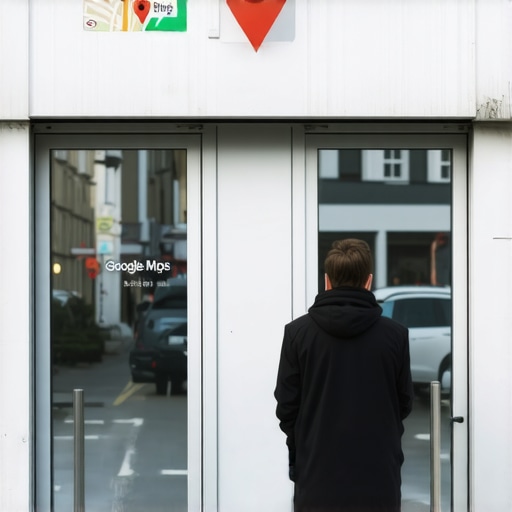
Why Your Business Only Shows Up on Google Maps When You’re Standing in the Lobby
You’re sitting at your desk, you pull out your phone, and you search for your primary service. There you are – Number 1 in the Google Map Pack. You feel a sense of pride; your google business profile seo seems to be working perfectly. But then, you drive three miles down the road to grab lunch, perform the same search, and your business has completely vanished from the results. It hasn’t just dropped to position four or five; it’s fallen off the face of the digital earth.
This is what I call the “Lobby Trap.” It is the most common symptom of a local SEO strategy that relies solely on physical proximity rather than digital authority. As a Local SEO and Google Business Profile expert, I see this daily: businesses that are technically “alive” on Google but essentially invisible to anyone who isn’t standing in their parking lot. To dominate your market, you need to break out of this proximity cage and extend your reach across the entire city. If your visibility dies at the edge of your zip code, your business is leaving 80% of its potential revenue on the table.
The Proximity Paradox: How the Google Maps Algorithm Actually Works
To fix the Lobby Trap, we must first diagnose how the google maps ranking system actually functions. Google’s local algorithm is built on three fundamental pillars: Relevance, Proximity, and Prominence. While most business owners understand these terms in a general sense, they rarely understand the mathematical relationship between them.
Proximity is the distance between the searcher and your business. It is the most “stubborn” factor because you cannot move your building closer to every potential customer. Relevance is how well your profile matches what the user is looking for. Prominence is how well-known your business is in the digital world (based on reviews, backlinks, and mentions).
Here is the paradox: If your business has low Prominence and average Relevance, Google will default almost entirely to Proximity. This creates a “proximity cage” where you only rank for people within a few hundred yards of your front door. To rank higher on google maps across a wider radius, you have to “over-perform” in Relevance and Prominence. You essentially have to give the algorithm enough evidence of your authority that it decides to show your listing to a searcher 5 miles away, even if there is a competitor only 1 mile away from them. You can learn more about the 5 ranking signals Google actually cares about for Map Packs to understand how these pillars shift based on industry.
5 Reasons Your Google Business Profile is “Caged” to Your Address
If your reach is limited to your immediate vicinity, it’s usually because of one (or all) of the following technical failures. As a specialist in google business profile optimization, I find that these five areas are where the “Lobby Trap” is set.
1. NAP Inconsistency: The Trust Killer
NAP stands for Name, Address, and Phone number. If your business name is “Main Street Plumbing” on Google, but “Main St. Plumbing, LLC” on Yelp, and “Main Street Plumbers” on your website, Google’s trust in your location wavers. Even a single digit difference in a phone number across different directories can cause the algorithm to shrink your ranking radius. When Google isn’t 100% sure of your data, it won’t risk showing you to users further away.
2. Category Confusion
Choosing the wrong primary category is like trying to sell steak at a vegan convention. If you are a “Personal Injury Attorney” but your primary category is set to the generic “Lawyer,” you are competing in a massive, diluted pool. By selecting the most specific primary category and relevant secondary categories, you increase your Relevance, which helps “stretch” your proximity. For more on this, check out why Google doesn’t trust your business address and how to fix it.
3. The “Ghost” Listing & Virtual Office Traps
Google is aggressive about filtering out businesses that use virtual offices or P.O. boxes. If you are using a coworking space or a “Virtual Office” to try and game the system, Google’s “Possum” update likely has you filtered out. If multiple businesses in the same industry share the same building or even the same floor, Google will often only show one of them to prevent “clutter.” If you’re the one being filtered, you’ll only show up when the searcher is practically inside your office.
4. Lack of Local Backlinks
Generic SEO backlinks from national blogs don’t do much for your map rankings. To rank google business profile effectively, you need local relevance. This means links from the local chamber of commerce, local news sites, and neighborhood blogs. These signals tell Google that you are an authority in *this* specific city, not just a random website on the internet.
5. The Service Area Business (SAB) Mistake
Many plumbers, HVAC techs, and cleaners hide their address because they work at customer locations. While this is allowed, if you haven’t correctly defined your Service Areas or if your website doesn’t explicitly mention those neighborhoods, Google will default your “center point” to a very small radius around your verified home or office address. This often results in a total loss of visibility beyond a 3-mile radius.
Breaking the 5-Mile Barrier: Strategies for Hyper-Local Dominance
The “5-Mile Test” is a common industry benchmark. Most unoptimized profiles disappear from the Map Pack once a searcher moves 3 to 5 miles away from the business location. To break this barrier, you need to implement advanced local seo tools and tactics that signal authority across a wider geography.
Geo-Tagging and Visual Evidence: Google reads the metadata of the photos you upload. By using tools like geoimgr.com to ensure your photos have the correct GPS coordinates of the jobs you’ve done across the city, you provide “proof” of your service area. If you’re a roofer in Austin, but all your photos are geo-tagged to your office in North Austin, why would Google show you to a homeowner in South Austin?
City and Neighborhood Pages: Your website needs to do the heavy lifting for your Google Business Profile. Create dedicated pages for every major suburb or neighborhood you serve. These shouldn’t be “thin” pages with just a map; they need localized content, testimonials from customers in that specific area, and localized schema markup.
The Review Velocity Factor: Data shows that businesses with 100+ reviews and active weekly posts have a 50% higher chance of ranking outside their immediate zip code. However, it’s not just about the number; it’s about the content. When a customer leaves a review saying, “Best plumber in [Neighborhood Name],” it acts as a powerful Relevance signal that helps you bypass the proximity filter. You need to consistently improve google maps rankings by engaging with every review and using Google Posts to highlight local projects.
The Role of Professional Google Maps Ranking Services
At a certain point, the DIY approach to local SEO reaches a plateau. You can only “optimize” your business name and categories so many times before you hit a wall. This is where a professional google maps ranking service becomes essential. Professional google business profile seo involves deep technical audits that most business owners simply don’t have the time or tools to perform.
A professional service doesn’t just look at your profile; they look at your “Local Entity.” This includes auditing your brand’s footprint across the entire web to ensure there are no conflicting signals. It involves using local seo software to run heatmap reports, showing exactly where your rankings drop off so that hyper-targeted “local signal” campaigns can be launched in those specific dead zones. If you’re curious about the specifics, you can read about what you actually get inside a professional local SEO package.
The goal of a gmb ranking service is to move you from being “Lobby Famous” to being “City Famous.” We do this by building a moat of digital authority around your business that the proximity algorithm cannot ignore.
Advanced Tactics for 2026: Schema, Neighborhoods, and Signals
As we move toward 2026, the local algorithm is becoming more sophisticated. We are seeing a shift toward “Neighborhood-level” targeting. Google is no longer just looking at your city; it’s looking at how you fit into specific micro-communities.
One of the most overlooked aspects of modern google business profile optimization is the use of “Missing Schema Fields.” Most businesses use basic Organization schema, but they fail to implement areaServed, hasMap, or geo coordinates within their website’s code. These fields act as a direct bridge between your website’s authority and your Map Pack listing.
Furthermore, Google is increasingly looking at “User Interaction Signals.” If people see your listing in the Map Pack but don’t click “Directions” or “Call,” Google assumes you aren’t relevant to that area and will shrink your radius. This is why having a high-converting profile – complete with high-quality video, FAQs, and a compelling “About” section – is actually a ranking factor. It’s not just for the customer; it’s for the algorithm. You can dive deeper into the 5 specific schema fields that actually influence local search visibility to stay ahead of the curve.
Conclusion: From “Lobby Famous” to City-Wide Dominance
If your business only shows up on Google Maps when you’re standing in the lobby, you don’t have a ranking – you have a proximity placeholder. To truly dominate your local market, you must shift your focus from simply “having a profile” to building a local authority entity. This requires a combination of consistent NAP data, localized content, strategic backlinking, and technical schema optimization.
Stop settling for the customers who happen to be driving past your front door. It’s time to expand your radius and capture the searchers who are looking for your expertise five, ten, or even twenty miles away. If you’re ready to break out of the proximity cage, I recommend starting with a comprehensive google business profile audit to identify the specific “leaks” in your local authority. Or, if you’re ready for a custom local seo strategy, reach out to me, Shahid Anwar, and let’s put your business on the map – everywhere.