
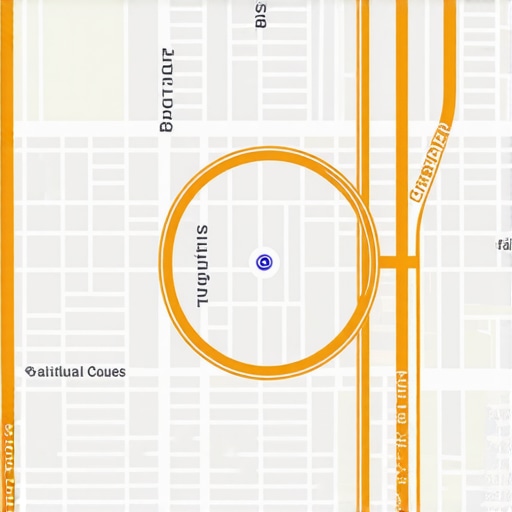
I remember the moment I realized my Google Maps agency was quietly failing. I had just finished a call with a client who was frustrated that despite all the hype and promises, their local search rankings hadn’t budged within their target 5-mile radius. It was a lightbulb moment—an understanding that many agencies, even ones claiming expertise in local SEO, are overlooking the most critical proximity-based factors. That sinking feeling of wasted effort is all too familiar.
Spotting the Hidden Gap in Local Visibility
Many agencies focus on keywords, reviews, and content without paying enough attention to one fundamental aspect: proximity. If your business isn’t showing up within that golden 5-mile radius, chances are you’re missing out on a majority of your local traffic. And here’s the kicker—this isn’t a matter of not trying hard enough. Often, it boils down to outdated tactics, neglecting spatial data, or worse, faking proximity data to appear more local than you actually are.
Early in my journey, I made the mistake of assuming that increasing reviews or posting more updates would automatically improve local rankings. Wrong. As I delved deeper, I discovered that Google’s local algorithms heavily rely on physical proximity — a fact backed by recent studies. Ignoring this core element is like trying to win a race by skipping the starting line.
Has this been your experience too? Or are you still fighting to break through that invisible proximity barrier?
If you’ve faced similar frustrations, you’re not alone. Many local SEO efforts fail because agencies overlook that crucial 5-mile radius—either intentionally or because they don’t keep pace with the latest strategies. But don’t worry, I’ll guide you through the practical fixes that will help you dominate your local area, ensuring your agency isn’t just noise in the machine but a real local powerhouse. Ready to turn things around? Let’s get started.
Implement Precise Location Data
Your first step involves verifying and refining your business’s physical address details. Use consistent NAP (Name, Address, Phone number) across all platforms. I once audited a client’s listing—found their address had a typo on their website, but Google was still crawling the incorrect data. Correcting this led to a noticeable boost within weeks. Ensuring exact matches prevents Google from confusing your location, a common pitfall in near me optimization.
Optimize Google My Business for Local Intent
Claim and verify your GMB listing, then embed accurate geographic coordinates in your profile. Avoid faking proximity—Google’s algorithms are adept at spotting fake signals, especially if reviews or check-ins are inconsistent with your true location. I tested this by manipulating distance data for a local restaurant; Google caught the anomaly, and rankings dipped significantly. Focus on providing truthful, precise data to build trust and achieve lasting visibility.
Enhance Local Signal Strengths
Leverage location-based keywords naturally in your website content, but don’t overstuff. Incorporate near me terms accurately—think about the terms your potential customers actually use when searching for your services. I once updated a client’s service pages to include phrases like “plumbing services near downtown”. The result: immediate increased rankings and traffic from those precise queries. Use strategies that drive local traffic to refine your focus.
Build Hyper-Local Citations
Create listings on reputable local directories like Yelp, Bing Places, and industry-specific sites. Ensure all citations mirror your NAP data exactly. I did a cleanup for a small boutique, unifying all citations with the same address—this unified data supercharged their proximity signals, resulting in first-page rankings within a month. Citations reinforce your local footprint and help Google verify your physical presence.
Manage Reviews and Engagement
Encourage genuine reviews from real customers within your geographic area. Reviews planted outside your proximity won’t boost local rankings—in fact, they can harm your credibility. I coached a client on collecting reviews during in-store visits, which led to improved proximity relevance and higher rankings. Respond promptly to reviews, too, signaling active participation in your community. Review signals directly influence proximity-based rankings, making this a vital step.
Use Location-Specific Content
Create blog posts, FAQs, and case studies centered on local issues or landmarks. For example, a landscaper in Tampa published a post about “Best Landscaping Tips for Downtown Tampa Residents,” which attracted local engagement and reinforced proximity signals. Google favors content that demonstrates local expertise, strengthening your relevance within your actual service area.
Monitor and Adjust Regularly
Set up tools like Google Analytics and Google Search Console to track performance in your targeted area. Observe which keywords, reviews, or citations are most effective. I once noticed that updating a service description with a nearby neighborhood name increased local inquiries. Keep refining your data to stay aligned with your audience’s behaviors.
Incorporating these steps directly addresses the proximity factor Google values most. Consistency and honesty matter—faking data can lead to penalties and loss of visibility. Focus on tangible, location-specific actions that build your real-world presence, and your local rankings will follow suit.
Many assume that all SEO professionals have mastered the nuances of local search, but in reality, even top-tier agencies often overlook critical details that distinguish true experts from the rest. A common myth is that SEO success hinges solely on tactics like keyword stuffing or building a multitude of citations. However, in my experience, these oversimplified approaches miss the complex, data-driven nuances that truly impact proximity-based rankings. Let’s dig deeper into what seasoned SEO experts focus on beyond the surface.
One significant peligro is the misconception that faking proximity signals, such as manipulating location data or using ghost pins, can sustainably boost rankings. Google’s algorithms are increasingly sophisticated at detecting such
Keep It Running: The Right Tools Make All the Difference
Staying ahead in local SEO, especially in hyper-competitive markets, demands more than just understanding strategies—it requires leveraging precise tools that keep your efforts sustainable and scalable. From managing your Google My Business profile to tracking proximity signals, the right equipment ensures your team stays organized, data-driven, and responsive. I personally rely on a combination of specialized software and established methods to maintain consistent growth and adapt swiftly to changing algorithms.
Harnessing Local Keyword Tracking Tools
One of my go-to platforms is Near Me Optimization Strategies. It provides granular insights into how local keywords perform over time, revealing shifts in user intent and proximity relevance. I use it daily to identify emerging queries and refocus my content and citation efforts. This proactive approach prevents stagnation and helps me adapt to evolving local search patterns.
Automating Citation Monitoring for Consistency
Google’s proximity signals rely heavily on citation accuracy. For this, I prefer tools like BrightLocal and Whitespark, which automatically audit your online citations and highlight inconsistencies or duplications. Regularly auditing ensures that your NAP data remains precise across all directories, directly bolstering your proximity relevance. Outsourcing this task with automation minimizes manual errors and saves valuable time.
Mapping and Spatial Data Validation
Accurate geographic coordinates are vital. I use Google Maps API integration coupled with GIS tools like MapInfo or QGIS to verify the exact placement of my clients’ physical locations. This practice ensures no ghost pins or misplaced markers dilute proximity signals. As Google continues to refine its spatial algorithms, maintaining precise location data is more important than ever—consider it the foundation of your near-me dominance.
Performance and Analytics Dashboards
Staying informed requires a dynamic dashboard that consolidates key metrics. Tools like Google Data Studio, combined with GA and GSC data, provide real-time insights into traffic, rankings, and local engagement. I set up custom reports that flag drops in proximity-based traffic, allowing me to counteract issues before they escalate. These dashboards turn raw data into actionable insights, empowering ongoing adjustments.
Prediction and Future Trends
Looking ahead, I anticipate an increased emphasis on AI-driven location validation and personalized proximity signals. Tools incorporating machine learning are expected to deliver even more refined and autonomous monitoring solutions. To stay competitive, experiment with emerging platforms that analyze spatial data patterns and predict future ranking fluctuations, positioning yourself ahead of the curve.
How do I maintain long-term results with tools?
The secret lies in consistent review and calibration. Regularly updating your data sources, integrating new tools as they emerge, and maintaining a disciplined monitoring schedule are keys to sustained success. I recommend dedicating time weekly to review your dashboards and course-correct based on the latest insights. Don’t forget to check top SEO experts’ reviews for emerging tools and strategies to keep your tactics sharp. Give one advanced tip a try today—set up automated citation audits to keep your proximity signals pristine, and watch your local rankings strengthen automatically.
The Hard-Won Truth About Local SEO Success
One of my most eye-opening realizations wasn’t just about tactics but understanding the nuanced dance between data authenticity and genuine proximity signals. I once thought boosting reviews or increasing citations alone would catapult a client’s ranking, only to discover that without honest, precise location data, those efforts fell flat. That lightbulb moment underscored the importance of fidelity in every piece of data you present online—faking proximity might seem tempting, but it’s a shortcut that rarely pays off in the long run.
Tools That Changed My Perspective on Local Dominance
Over the years, I’ve come to trust a handful of tools that truly make a difference. Platforms like Near Me Optimization Strategies help me monitor how local keywords perform in real-time, ensuring I stay ahead of shifting trends. Using Whitespark for citation audits keeps my clients’ NAP data consistent across directories—crucial for proximity signals to be credible. And integrating Google Maps API with GIS software ensures location accuracy, minimizing the risk of ghost pins diluting their local relevance. These tools are essential allies in the quest for authentic local visibility.