How We Doubled Phone Calls From Google Maps Using One Tiny Fix
There is a specific kind of frustration that only a local business owner understands: looking at your Google Business Profile (GBP) dashboard, seeing thousands of “views” and “impressions,” yet having a phone that refuses to ring. In the industry, we call this the “Ghosting” problem. Your business is technically visible, but it is invisible to the people who actually want to spend money. You are ranking for the wrong things, in the wrong places, to the wrong people.
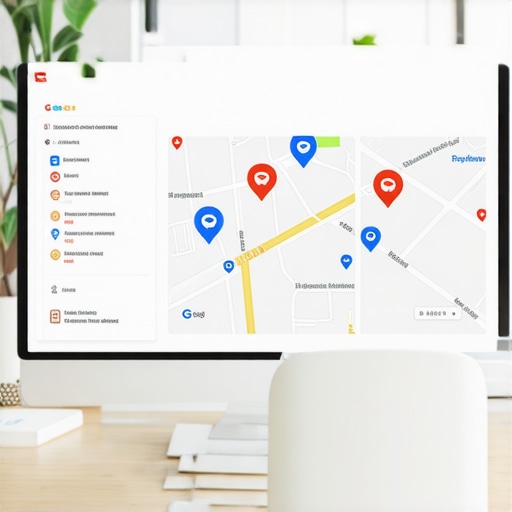
Most customers today don’t even make it to your website. Their journey begins and ends on Google Maps. The “Map Pack” – those top three results that appear at the top of a local search – captures the highest immediate intent of any digital real estate on the planet. If you aren’t there, or if you are there but your profile doesn’t compel a click, you are effectively out of business. We recently took a client from 15 calls a week to over 30 by ignoring the “big” SEO advice and focusing on one tiny, overlooked technicality. This post will break down exactly how we did it and how you can apply the same google business profile optimization to your own local presence.
The “Ghost Profile” Epidemic: Why You’re Ranking but Not Ringing
Visibility does not equal conversions. This is the hardest lesson for many marketing agencies to learn. You can rank #1 for a high-volume keyword, but if that keyword doesn’t match the searcher’s intent, your “Call” button remains what researcher Caleb Ulku calls a “dead call button.” A dead call button occurs when a user finds your profile, glances at it, and immediately realizes you aren’t the exact solution they need. They don’t click; they keep scrolling.
The “Ghost Profile” epidemic is caused by a misalignment between what Google thinks you do and what the customer is actually looking for. Often, this is a result of a profile that lacks trust signals or, more commonly, a profile that has been categorized incorrectly. If your primary category triggers the wrong intent, you might show up for “Handyman” searches when you are actually a high-end “Kitchen Remodeler.” You’ll get the views, but you won’t get the high-ticket phone calls. This is one of many 5 Practical Fixes Your Google Maps Agency Probably Missed that can transform your lead flow overnight.
In 2026, the algorithm is smarter than ever. It isn’t just looking for keywords; it is looking for “Entity Relevance.” Google wants to know if your business is the most relevant entity for the specific problem the user is trying to solve. If your profile is generic, Google treats you as a generic option, usually burying you behind competitors who have more specific, data-rich profiles. To stop being a ghost, you have to provide Google with the granular data it craves.
The Case Study: From 15 to 30+ Calls per Week
Let’s look at the data. We recently worked with a concrete contractor who was struggling. They were hovering around position #4 or #5 for most of their main keywords. They were getting about 15 calls a week – enough to survive, but not enough to scale. They had tried everything: more reviews, more backlinks, and even posting daily updates to their GBP. Nothing moved the needle.
We applied what we call the “Core 30 Method,” which involves auditing the top 30 local ranking signals. What we found was a classic case of category mismatch. The business was listed primarily as a “Paving Contractor,” but 80% of their revenue came from “Concrete Driveways” and “Decorative Concrete.” By the time we finished our google business profile seo audit, we realized they were competing in the wrong arena.
The reveal was simple: The “Tiny Fix” wasn’t about getting 100 more reviews. It was about Primary Category Alignment. We swapped their primary category to “Concrete Contractor” and then meticulously rebuilt their Services menu. The result? Within 21 days, they hit the #1 spot for their most profitable keywords. According to the “300% Rule” (based on data from Concrete Everything), businesses that move from the bottom of the Map Pack to the #1 spot typically see a 300% increase in lead volume. While we didn’t hit 300%, we did double their call volume, taking them from 15 calls to over 30 per week. To achieve this, we utilized a comprehensive google business profile seo strategy that focused on intent rather than just volume.
Step-by-Step: How to Implement the “Category & Service” Fix
If you want to replicate these results, you need to stop guessing and start using data. Here is the exact three-step process we used to double those calls.
1. Audit the Primary Category
Your primary category is the single most important ranking factor on your profile. It carries more weight than your business name, your reviews, or your website’s authority. You must use a google business profile audit tool to see what your top three ranking competitors are using. Often, businesses choose a category that is too broad. If you are a specialized lawyer, don’t just pick “Lawyer”; pick “Personal Injury Attorney.” This specificity tells Google exactly which “buckets” to put you in. You can use google maps ranking service to analyze how different categories affect your local reach.
2. The “Services” Goldmine
Most business owners ignore the “Services” tab in their GBP dashboard, or they let Google “suggest” services based on their website. This is a massive mistake. The Services menu is a goldmine for long-tail search rankings. Google uses the text in your service descriptions to justify ranking you for specific, niche queries. For our concrete contractor, we didn’t just list “Concrete.” We added custom services like “Stamped Concrete Driveways,” “Retaining Wall Construction,” and “Commercial Concrete Foundations.” Each service was given a 300-word description rich with local keywords and intent-based language. This is one of the most effective 7 Google My Business SEO Tips for Hyper-Local 2026 Growth because it feeds the algorithm exactly what it needs to see to verify your expertise.
3. NAP Consistency and Entity Verification
While the category fix is the “tiny” change that yields big results, it won’t work if your foundation is cracked. You must maintain strict name address phone consistency (NAP) across the entire web. If Google sees your business name listed differently on Yelp, Facebook, and your own website, it creates “Entity Confusion.” When Google is confused, it doesn’t rank you. Ensuring your NAP is identical everywhere is the first step in any serious rank google business profile campaign.
Beyond the Fix: 2026 Local SEO Ranking Factors
As we move into 2026, the landscape of local search is shifting. We are seeing the rise of “Zero-Click Filters.” This is where Google provides so much information on the search results page that the user never feels the need to visit your website. They see your reviews, your services, your photos, and your “Call” button all in one place. If your profile isn’t fully optimized, you lose the lead before they even know you exist.
The three pillars of 2026 Local SEO remain Proximity, Relevance, and Prominence.
- Proximity: How close is the searcher to your business? We use the “5-Mile Radius Test” to see where rankings drop off. If you rank #1 at your front door but #20 three miles away, you have a proximity gap.
- Relevance: This is where our “Tiny Fix” lives. Does your profile match the search query?
- Prominence: How well-known is your business? This is driven by reviews, backlinks, and citations.
To stay ahead, you should be using local seo software to track “Heatmaps.” Heatmaps show you exactly where your rankings are strong and where they are failing. This allows you to target specific neighborhoods with localized content and “Service Area” adjustments. If you want to rank higher on google maps, you must treat your GBP as a living asset, not a “set it and forget it” profile.
Common Pitfalls: Why Most “SEO Agencies Near Me” Fail
If you’ve hired an agency in the past and didn’t see results, you aren’t alone. Most “SEO agencies near me” are still using tactics from 2018. They focus on “Directory Syncs” and “Citation Building” as their primary service. While these are necessary, they are the bare minimum. If an agency tells you they are “submitting you to 50 directories” and that’s the bulk of their work, they are overcharging you for automated tasks. You need to know How to Spot if a Local SEO Partner is Overcharging for Basic Directory Syncs.
Another dangerous trend is the use of bots for map edits or fake reviews. Google’s AI is now incredibly proficient at spotting unnatural patterns. A sudden influx of reviews from accounts with no history, or map edits from “Local Guides” who have never been to your city, can lead to a permanent suspension of your profile. Real gmb ranking service involves manual, high-quality work: writing real service descriptions, uploading geo-tagged photos, and engaging with real customer questions. Many owners are left wondering Why Your Local SEO Partner Is Quietly Ignoring Your Biggest Competitors, and the answer is usually that they don’t have the technical tools to actually beat them.
Finally, avoid agencies that don’t offer a google maps rank tracker. If you can’t see your progress on a map, you aren’t doing Local SEO; you’re just doing SEO. Local search is spatial. You need to see how your “bubble” of influence is growing over time. Without this data, you are flying blind.
Conclusion: Your 24-Hour Action Plan
Doubling your phone calls doesn’t always require a massive budget or a year-long contract. Sometimes, it just requires precision. The “Tiny Fix” – aligning your primary category and maximizing your services menu – is the highest ROI activity you can perform on your Google Business Profile today. It costs nothing but time, yet it can fundamentally change the trajectory of your business.
Your 24-hour action plan is simple:
- Open your GBP dashboard and look at your primary category. Compare it to the competitors who are currently beating you.
- Delete the generic service descriptions Google provided and write 5-10 custom, keyword-rich descriptions for your most profitable services.
- Check your NAP consistency across your top 5 social profiles.
If you want to automate this process and get a professional-grade look at your standings, I suggest you use local seo tools to perform a deep-dive audit. Stop settling for views and start demanding calls. Through proven SEO techniques, careful profile optimization, and precise citation building, your business can maintain a commanding presence in local search.
By focusing on the “Core 30 Method” and ensuring your profile is an exact match for user intent, you can break out of the “Ghost Profile” trap. Whether you use a gmb seo tools suite or do it manually, the key is consistency and technical accuracy. The Map Pack is waiting for you.
Comments are closed.